Nordic Crisis Management in Covid-19
Nordic House, Sæmundargata 11, 102 Reykjavík Directions
Wed Oct 28 2026 12:00
Nordic Crisis Management in COVID-19: Lessons Learned for the Next Catastrophe
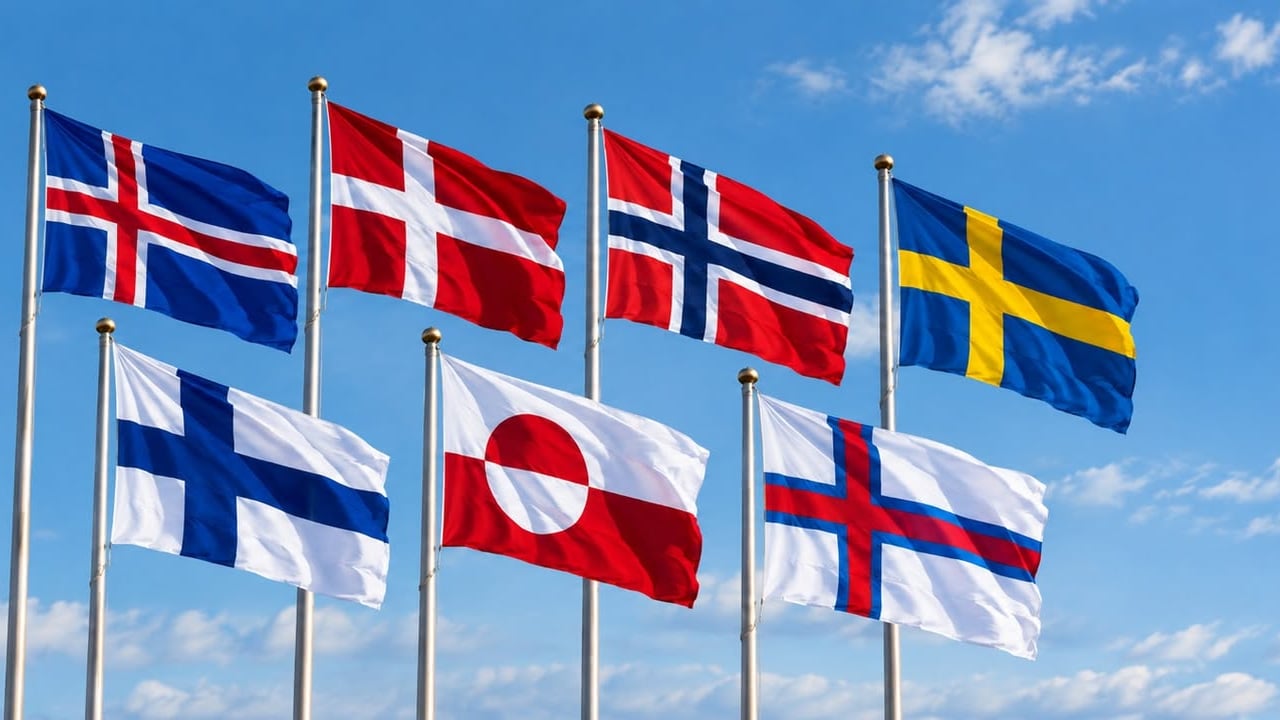
This conference marks the publication of the book "Nordic Crisis Management: Well-Performing Governance during COVID-19", edited by Ásthildur Elva Bernharðsdóttir, Professor at Bifröst University, and Baldur Þórhallsson, Professor at the University of Iceland. The volume provides the first systematic comparative analysis of how the five Nordic states, together with Greenland and the Faroe Islands, managed the COVID-19 pandemic. The conference will also address broader lessons for governance, resilience, and crisis management and discuss whether the Nordic model of crisis management is sufficiently prepared for the next major transboundary crisis in an increasingly uncertain and polarized international environment.
The conference brings together scholars from across the Nordic region who have participated in the research project Crisis Management and the COVID-19 Pandemic: Leadership, Expertise and Best Practices. The project has examined how administrative scale, polity and structural arrangements, and culture shaped crisis management in the Nordic countries during COVID-19.
Please register here: https://forms.cloud.microsoft/e/awMYFvMkVK
The event will take place in English and is open to all.
Programme
12.00 - 12.05 Welcome Words: The Project and the Book
Baldur Þórhallsson, Professor of Political Science and Research Director of the Centre for Small State Studies, University of Iceland
12.05 - 12.15 Opening Remarks: Iceland’s Preparations for the Next Crisis
Runólfur Þórhallsson, Director General and Chief Superintendent of the Civil Protection Unit at the National Commissioner of the Icelandic Police
12.15 - 12.30 Risk, Leadership, and Communication: Crisis Management across the Seven Nordic Entities
Speaker: Ásthildur Elva Bernharðsdóttir, Professor at Bifröst University
12.30 - 13.00 Smallness as a Strength: Crisis Management in Iceland, Greenland, and the Faroe Islands
Panel discussion: Maria Ackrén, Director of the Stefansson Institute, University of Akureyri
Vífill Harðarson, Researcher, Faculty of Political Science, University of Iceland
Rógvi Olavson, PhD Student, Faculty of History and Societal Sciences, University of the Faroe Islands
Moderator: Baldur Þórhallsson, Professor of Political Science and Research Director of the Centre for Small State Studies, University of Iceland
Break – 15 minutes
13.15 - 14.00 Between Command and Consensus: Finland, Denmark, Norway and Sweden in Crisis
Panel discussion:
Nina Hokkala, Research Assistant, Faculty of Management and Business, Tampere University
Mats Koraeus, Senior analyst at the Centre for Societal Security (CTSS) and Total Defence Campus coordinator Centre for Societal Security, Swedish Defence University
Alexander Trengereid, PhD research fellow, Faculty of Science and Technology, Department of Safety, Economics and Planning, University of Stavanger
Karsten Vrangbæk, Professor at the Political Science and Public Health Department, University of Copenhagen
Moderator: Eero Palmujoki, Lecturer, Faculty of Management and Business, Tampere University
Break – 15 minutes
14.15 - 14.30 The Role of Size, Structure, and Culture: Comparing the Seven Nordic Entities
Speaker: Per Lægreid, Professor Emeritus, Department of Government, University of Bergen
Moderator: Pia Hansson, Director of the Institute of International Affairs, University of Iceland
14.30 - 15.30 The Future: The Nordic Way and the Next Catastrophe
The final panel will discuss whether the Nordic model of crisis management is sufficiently prepared for the next major transboundary crisis in an increasingly uncertain and polarized international environment.
Panel discussion:
Katrín Jakobsdóttir, Prime Minister from 2017-2024
Víðir Reynisson, Chair of the General Affairs and Education Committee of the Althingi, and former Chief Superintendent of the Office of the National Commissioner of the Police
Pawel Bartoszek, Chair of the Liberal Reform Party’s Parliamentary Group
Per Lægreid, Professor Emeritus, Department of Government, University of Bergen
Karsten Vrangbæk, Professor at the Political Science and Public Health Department, University of Copenhagen
Moderator: Pia Hansson, Director of the Institute of International Affairs, University of Iceland